
- August 31 2026
-
 Amar Khadake
How a GRC Platform Simplifies DPDP Compliance
The Digital Personal Data Protection (DPDP) Act, 2023 is India’s comprehensive privacy legislation, enacted on August 11, 2023. It establishes a formal legal framework to protect individual privacy. The Digital Personal Data Protection Rules, 2025 were notified by the government in November 2025 for operationalizing the DPDP framework and providing for a phased commencement of different provisions. The DPDP Act establishes obligations for Data Fiduciaries and rights of Data Principals, including requirements around lawful processing, notice, consent, security safeguards, breach management, and data erasure. While many businesses understand the importance of compliance, managing DPDP requirements manually through spreadsheets, emails, and disconnected systems can be challenging.
This is where the GRC Platform becomes valuable. GRC stands for Governance, Risk, and Compliance. A modern GRC solution helps organizations streamline compliance processes, automate workflows, manage risks, and maintain continuous compliance with evolving regulatory requirements.
In this blog, we’ll explore how a GRC platform simplifies DPDP compliance and helps organizations build a scalable privacy program.
What is a GRC Platform?
Governance, Risk, and Compliance (GRC) is a structured way to align your business goals while managing the risks and meeting all the industry and governmental laws and regulations. It integrates organisations governance, risk management, and compliance in one co-ordinated model.
GRC platforms helps organisation manage:
- Compliance requirements
- Risk assessments
- Policies and procedures
- Vendor risk management
- Audit readiness
- Security controls
- Regulatory obligations
Instead of managing compliance activities across multiple spreadsheets and documents, organizations can monitor everything from a single dashboard.
Why DPDP Compliance Can Be Challenging
The most common challenges comes from:
- Lack of visibility into personal data processing
- Managing multiple policies and procedures
- Monitoring third-party vendors
- Handling Data Principal requests
- Collecting and organizing audit evidence
- Managing privacy risks
- Keeping compliance documentation updated
As organizations grow, these challenges increase significantly. Managing these challenges manually can quickly become complicated but such challenges in DPDP compliance are entirely fixable- if addressed early and systematically.
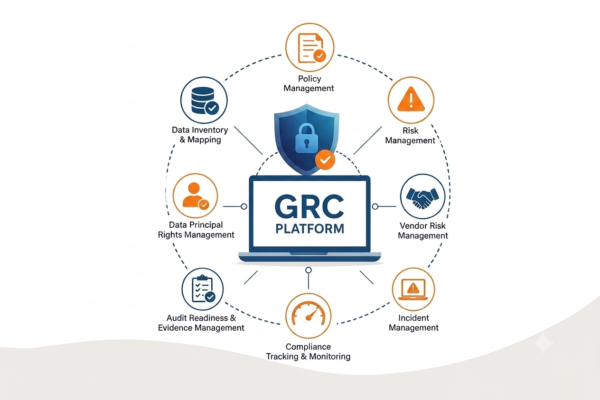
How a GRC Platform Simplifies DPDP Compliance
1. Centralized Policy Management
DPDP compliance requires organizations to translate regulatory requirements into operational practices.
A GRC platform can centralize documents and can
- acts as single repository for all the core policies
- Automate policy review reminders
- Version control and audit trail of policy revisions
- Employee policy acknowledgements
This ensures that policies remain accessible, controlled, and up to date.
2. Data Inventory and Data Mapping
The first step in DPDP Readiness is understanding what personal data the organization collects and processes.
A GRC platform can help organizations maintain a detailed data inventory which includes:
- Data subjects
- Data owners
- Processing activities
- Storage locations
- Retention periods
- Security controls
- Data flow maps
- Data classification records
This provides greater visibility into an organization’s personal data environment and makes compliance assessments easier to manage.
3. Privacy Risk Management
Risk management is a critical component of privacy compliance. The DPDP Act requires Data Fiduciaries to identify, evaluate, and mitigate vulnerabilities in processing personal data.
A GRC platform can streamline this process by creating a centralized risk register which can assess the identified risk based on their likelihood and impact, assign risk owners, create a mitigation plan, and automate this whole risk management lifecycle.
4. Consent Management
Consent Management is an important aspect of the DPDP framework. The DPDP Act requires that consent obtained by Data Fiduciaries must be free, specific, informed, unconditional and unambiguous, with clear affirmative action.
A GRC platform can help organizations establish processes for:
- Recording consent requirements
- Mapping consent to processing activities
- Tracking consent evidence
- Monitoring consent status
- Managing withdrawal requests
- Maintaining audit trails
This helps organizations move from fragmented consent tracking toward a more structured and auditable process.
5. Data Principal Rights Management
The DPDP Act grants Data Principal rights to ensure that they have control over the processing of their personal data. These rights include the right to access to information, correction, erasure, and nomination.
Organizations must be able to manage following requests based on the Data Principal Rights:
- Access requests
- Correction requests
- Consent withdrawal
- Grievance handling
- Deletion requests (where applicable)
- Nomination-related requests
So instead of tracking these requests through apps, websites, and emails, organisations can create a standardized workflow with ownership and deadlines for managing such requests using a GRC platform.It can improve response time for the requests and also improves record keeping.
6. Vendor Risk Management
Most of the organizations don’t process personal data entirely on their own. The Data Processors such as Cloud providers, Payroll vendors, HR platforms, etc process data on behalf of Data Fiduciaries.
A GRC platform can manage risks posed by third-party vendors by maintaining a centralized vendor register based on privacy and security requirements. It also helps organizations by performing:
- Vendor assessments
- Vendor inventory
- Due diligence workflows
- Data Processing Agreement (DPA) tracking
- Vendor review schedules
This improves vendor oversight, reduces third-party risks and strengthens the organization’s overall compliance posture.
7. Incident Management and Breach Response
Organizations must be prepared to respond effectively to privacy and security incidents. Security safeguards and personal data breach are important obligations under the DPDP framework.
A GRC platform can helps organization manage such incidents through a structured workflow by:
- Incident reporting
- Root Cause Analysis (RCA)
- Corrective action tracking
- Evidence collection
8. Audit Readiness and Evidence Management
One of the biggest compliance challenges is collecting evidence during audits, which is usually fragmented across spreadsheets, mailboxes, shared drives, and cloud storage.
A GRC platform simplifies this whole process of collecting evidence through automation and by creating a single repository where all the evidence can be stored reducing the compliance fatigue.
9. Compliance Tracking and Monitoring
DPDP compliance involves monitoring multiple controls and activities. Senior management requires clear visibility into the compliance performance to ensure your organisation safely and legally handles user data.
A GRC platform enables organisations to continuously monitor their compliance posture through:
- Real-time compliance dashboards
- Gap assessments
- Framework mapping
- Compliance scorecards
It can help organisations shift from periodic compliance toward continuous governance.
Why Businesses Are Moving to Compliance Automation
Governance is moving from a documentation function to a continuous operational discipline.Modern compliances challenges are increasingly operational rather than procedural. As regulations continue to evolve, organizations need scalable solutions.
A GRC platform can achieve audit readiness by improving operational efficiency and strengthening privacy governance. It can reduce regulatory risks and compliance costs.
By automating repetitive compliance activities, organizations can spend less time managing administrative tasks and more time strengthening their security and privacy posture.
How ComplyPhi Simplifies DPDP Compliance
ComplyPhi is a Governance, Risk, and Compliance (GRC) platform designed to help organizations streamline compliance programs, improve operational resilience and maintain audit readiness.
By bringing governance, risk, and compliance activities into a single platform, ComplyPhi reduces manual effort and improves visibility across the organization.
Conclusion
Achieving DPDP Compliance requires more than policies and documentation. Organizations need a structured approach to managing risks, vendors, incidents, audits, and privacy obligations.
A modern GRC Platform simplifies compliance by centralizing information, automating workflows, improving visibility, and enabling continuous monitoring. Whether you’re a startup or a large enterprise, investing in Compliance Automation can significantly reduce complexity and help build a sustainable privacy program.